
Lately I’ve been thinking about the paradox of more. I guess the math seems straightforward: more options, more features, more experiences equals more fulfillment. Yet this arithmetic rarely delivers on its promise. For me, it typically compounds into overwhelm, distraction, and a peculiar kind of exhaustion that comes from having everything while actually feeling nothing deeply. Accumulation is mistaken for richness, complexity for sophistication.
There’s an understated power to “less”. For example, I love simple mornings. Waking up feeling grateful for the luxuries I have access to that can be so easily overlooked—heat, 4 pillows, my dog, the moon outside my bedroom window, toothpaste. My 8 year old nephew and 10 year old niece describe high-quality things as being “built different”. I think that can be applied to simplicity. It’s just built different.
The white space around a word is what makes it legible. It allows for reading between the lines, interpretation. The silences, pauses and nuances between notes that create music. There’s a certain subtlety and refinement to simplicity that complexity can’t achieve. It’s about knowing when to remove one piece of jewelry before leaving the house. But it’s not about restriction. It’s about clarity. About allowing what’s there to fully engage. There’s a specific beauty in restraint.
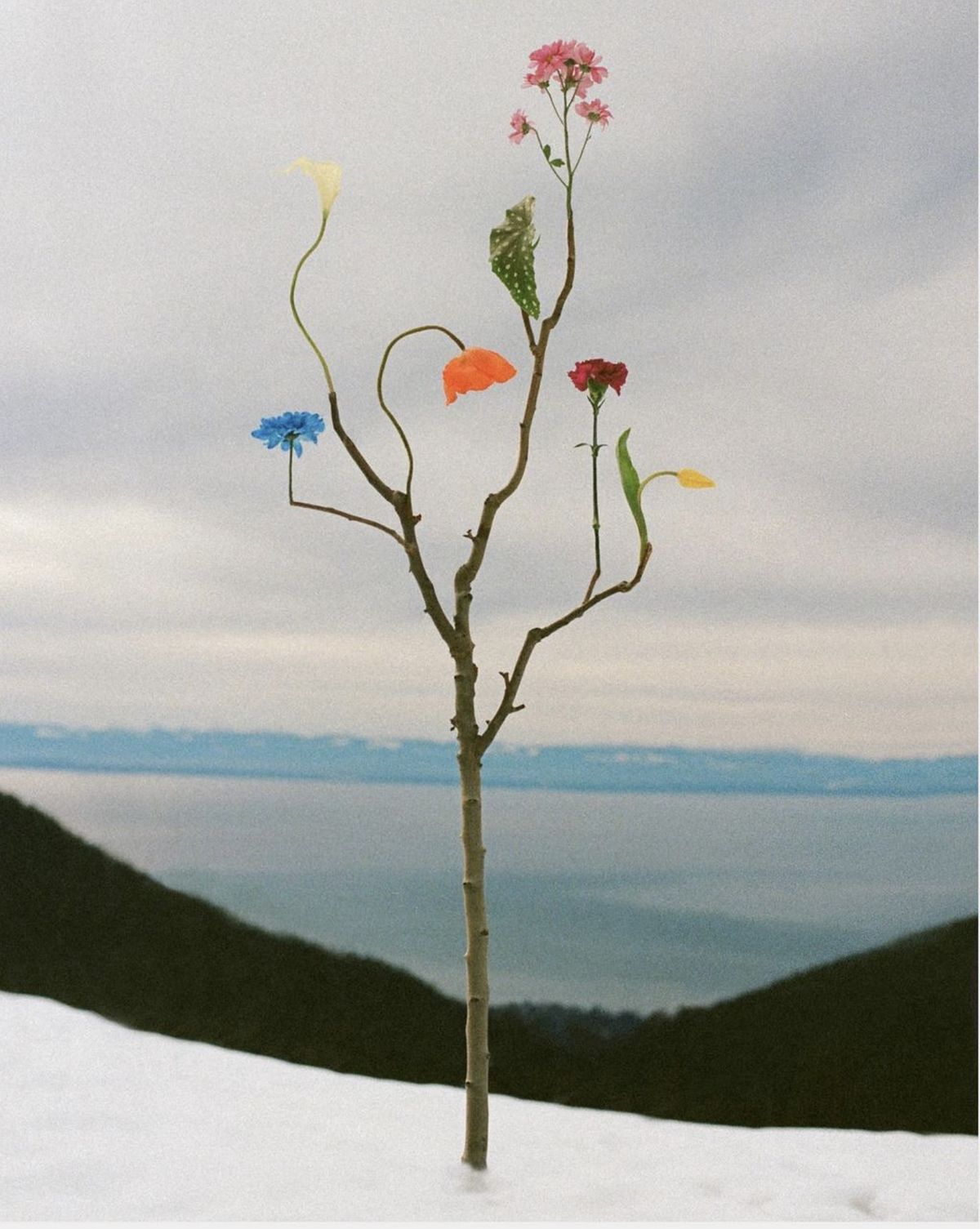
Consider how a single flower in a vase commands more attention than an overstuffed arrangement. It’s also why I love writing haikus. So much feeling, emotion, and depth can be communicated in just 17 syllables arranged in 3 simple lines. The beauty of simplicity lies in its refusal to shout. It suggests rather than declares. This restraint creates space for mystery—for the viewer, reader, or listener to complete the picture with their own imagination. Everyone has access to the same experience, but with the opportunity to fill in the blanks according to their own internal process. Simplicity invites participation rather than passive consumption.
There’s also a physiological response to simplicity that complexity cannot replicate. Clean lines, minimal choices, uncluttered spaces—these allow the nervous system to settle. When everything isn’t competing for attention, nothing demands frantic sorting. The mind can rest. This is why we’re drawn to the elegance of a well-designed object, the serenity of an empty room, the relief of a single clear decision, the quiet of sitting in meditation.
What appears simple is rarely simple to create. It’s the result of careful curation, of understanding essence. I have a collection of tiny, fine line tattoos on different parts of my body. Finding the right tattoo artist can be very difficult because these seemingly easy pieces leave very little room for error. But a deep sense of accomplishment is always present when it’s done because it speaks to refinement as the art of removal, and that’s rarely easy. A polished stone is more beautiful than the rough boulder it came from, but someone had to know which parts to wear away. Simplicity is sophisticated precisely because it represents choices made—the discipline of saying “this matters” and “this does not.” It’s editing as an art form.
The practice of simplicity extends beyond aesthetics into how I structure my days, relationships, and attention. I try to live the way I approach a haiku—choosing only what’s essential, letting each element breathe, trusting in what’s unsaid. But my fascination with simplicity isn’t about austerity. It’s about creating conditions where meaning can emerge, where we can actually experience what we’ve chosen rather than drowning in what we’ve accumulated.
Maybe simplicity feels radical because it requires trust that I’m enough without the additions. That the life I’d live with much less might actually contain more of what matters. In a culture addicted to more, choosing simplicity becomes both an aesthetic choice and a quiet rebellion—a way of saying that richness and restraint aren’t opposites, instead they’re partners in creating a life that feels spacious, intentional, and fully inhabited.