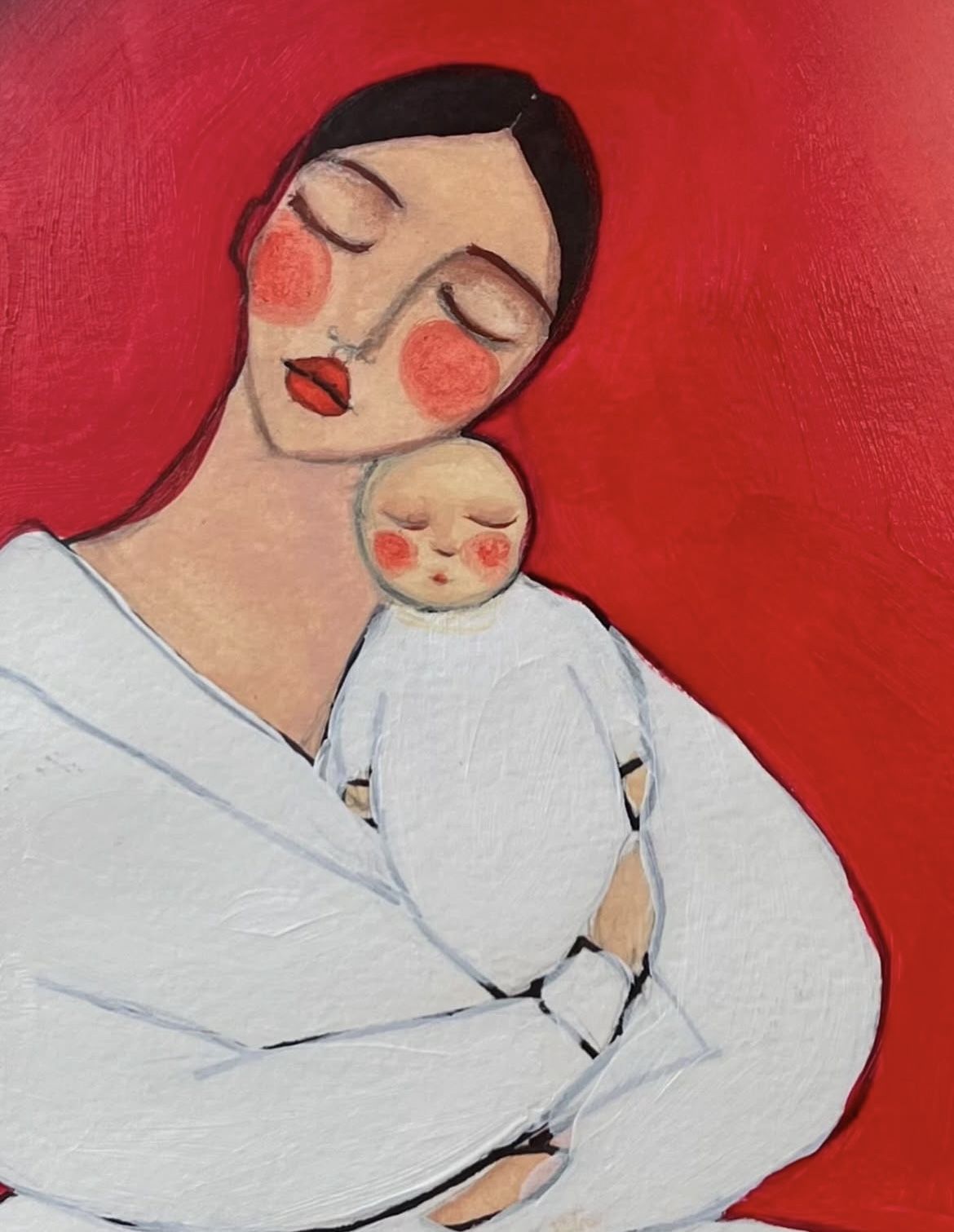

Do you want kids? For most of my life it wasn’t even a question. Yes, of course I want kids. I’m going to graduate from college, get a job, meet my partner, get married, buy a house, and then have a baby or two or five, raise them, and then cross my fingers that I’ve done a good enough job for them to want to take care of me and their dad when we’re old and gray. It wasn’t until my mid-thirties—unmarried, childless, and only responsible for myself—that I started to consider the alternatives.
My first thoughts of having babies were pretty fleeting. I was approaching thirty and working at a big tech company in New York that offered egg freezing support for employees. A coworker and friend around the same age was considering it. I had no interest at that point. It was hard for me to think about planning that far in advance, considering you never know what’s going to happen next. I can’t remember my exact response, but I imagine it was probably something like “Sounds good. Want to go for drinks after work?”
For the next several years I prioritized my career. I changed companies, pivoted positions, moved into leadership roles, and lived in different cities. I subconsciously chose chaos over calm in relationships. So I wasn’t exactly having conversations with my partners about moving in together, getting married, and raising children. I would just think to myself “I’ll get to that eventually.” But then thirty-five was around the corner and I hadn’t gotten to it. Society says freeze your eggs. So I actively played out that scenario.
I had waited until a few months before my thirty-fifth birthday to start the process. Over the course of a few weeks I had my ovaries and follicles and bloodwork assessed. I was warned of the declining viability of those eggs and told that embryos have a better chance of implanting when the time comes. But like me, my eggs were solo, and that meant taking a gamble with the freezer months before I reached “geriatric pregnancy” territory. It was all very sterile and void of delight. Did I want to freeze my eggs feeling like this? Can going into it with this energy affect my eggs in the same way that a mother’s mood can affect her baby in the womb?
I remember sitting on the sidewalk outside of my apartment in LA, reading the email from my doctor’s office about the process—medications, hormone injections, retrieval, recovery. I felt conflicted. Rationally, it made sense. Women freeze their eggs all the time. It doesn’t matter if you’re partnered or solo. It’s just an insurance policy you’re taking out on your birthing potential. But I didn’t want to do it. It was hard for me to close my eyes and picture going through the motions of injecting myself for two weeks let alone what happens later on once those eggs are unfrozen and ready for business. More importantly, it was difficult for me to imagine putting the potential baby before the potential partner.
Deciding not to freeze my eggs gave me an important point of clarity. I wanted to prioritize meeting and choosing my partner over insuring my eggs. I have friends who say they would have a baby no matter what, but that wasn’t the case for me. I’ve always felt that if I’m meant to have biological children, it will happen without the insurance policy. Thirty-five came and went and as the years continued to go by and I remained single, I started to consider other possibilities again.
Could I have a baby on my own? Do I want to raise a kid on my own? I’ve always pictured myself doing all of it with a partner. Not just the moment of bringing a baby into the world, but the entire experience—taking turns with late night feedings, making parenting decisions together, watching someone else love and protect the same little person I created. The ability to step away for a few minutes and remember who I am outside of being a parent because there’s another adult holding it down with me.
If I’m honest, when I imagine choosing solo parenting, it’s usually because of time—and maybe a little bit of pressure—not because it feels like the clearest version of what I want. It feels more like responding to a timeline than following a desire.
But does the absence of a partner need to result in the absence of a baby? I love children. I love their curiosity, their honesty, the way everything feels like magic with them. But the reality is that I’m only experiencing what I love most about them before the parents take over for all the important responsibilities—nightly bath routines, diaper changes, preparing bottles, sick care, schedules, packing lunches, school pickup and drop-off, and all of the in-between. If I do this on my own, it’s not just cuteness and laughs and playtime. It’s everything. And do I really want that?
Sometimes I wonder whether taking on such a massive responsibility would slowly reshape me in ways I can’t anticipate. Little things like the ability to write in the morning without interruption. Big things like the freedom to follow my curiosity wherever it leads. I’ve built a life I love—one that allows for spontaneity and offers space for introspection. Would I have the capacity to be the kind of mother I’d want to be while also remaining the person I’ve worked so hard to become? Or does one inevitably consume the other?
Even with a partner, plot twists often happen and sometimes that partner doesn’t follow through on equal parenting. Then one person ends up with all or the majority of responsibilities anyway. But at least there’s the possibility of true partnership. At least there’s someone else in the house. At least you’re not doing every single moment alone.
Is having kids an important enough experience for me to choose it independent of partnership? Do I want that responsibility—really want it—enough to take it on solo? I genuinely don’t know. And that’s where I’m at right now.
I can’t answer “do I want kids” in a vacuum because my answer depends on something I can’t control. Solo parenting doesn’t feel obvious to me right now. Not because it’s wrong, but because I can’t see that path clearly when I’m still focused on another one. I’m trusting that the life I’ve imagined is possible. And choosing solo parenting feels like it might mean giving up on that, even though rationally I know it doesn’t have to.
But what if the partner comes and it’s too late biologically? What if I meet him at forty-two and we’re letting things unfold naturally and it doesn’t happen? There are couples in my life with long-lasting, happy marriages and no kids. They have built lives I admire that involve the freedom to do what they want without the added responsibility of children. Their partnerships are different from those with children, but certainly no less meaningful. Would that be enough for me?
Then there’s adoption. When I think about why I want to have my own baby, it’s not because I’m only interested in seeing my DNA mixed with someone else’s. It’s because I want to have the experience of growing and birthing a human. Women get to have this unique experience of developing another person inside of ourselves. I’m not sure I’m okay with forgoing that part of life. But then I also think about all the children in the world who are without loving parents and safe homes, and adoption starts to feel like a clear path too—choosing instead of creating.
The truth is I’m holding multiple futures as equally possible right now: partnered parent, solo parent, adoptive parent, or no kids at all. I don’t know which one I’ll end up living, or if I’ll end up living some combination of them. I don’t know which one I actually want most. And I’m learning that not knowing is its own kind of experience—uncomfortable, unsettling, but also somehow right for where I am.
When I close my eyes and picture my ideal today, I see myself with a partner, building a life together, and letting things unfold. I see myself being with someone who is open to possibilities. Open to kids, biological or adopted. Open to not actively trying or actively preventing. Open to allowing things to happen naturally and having all the important conversations along the way. That vision feels right to me. But I also know it requires someone else showing up, and I can’t control that timeline.
So for now, I’m exploring all the questions. Trusting that the answers will come while I’m focused on living—meeting my partner, navigating my own shifting priorities, experiencing what I can’t anticipate yet. Trusting that I will create a meaningful life regardless of what happens next.